
 Image 1 of 2
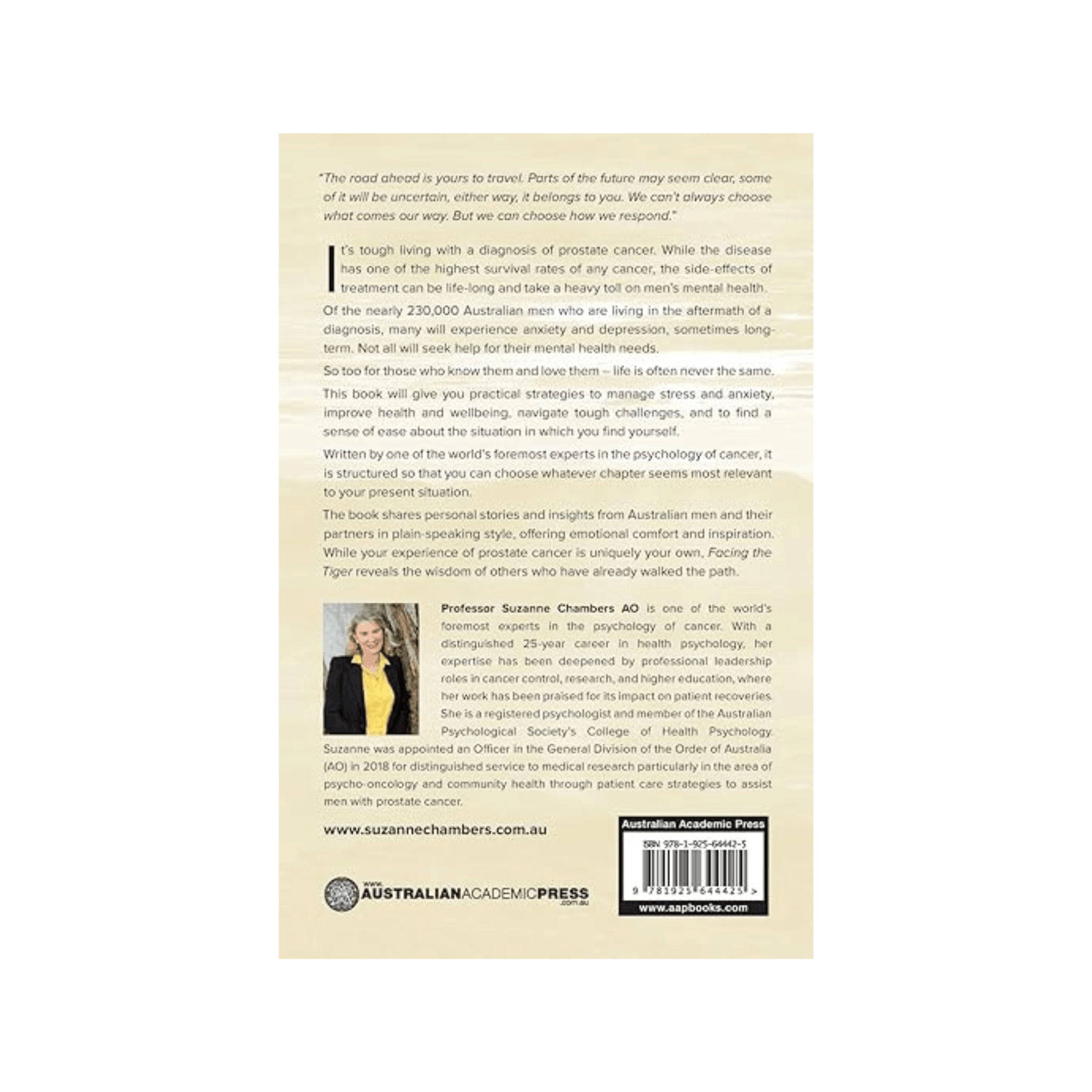 Image 2 of 2
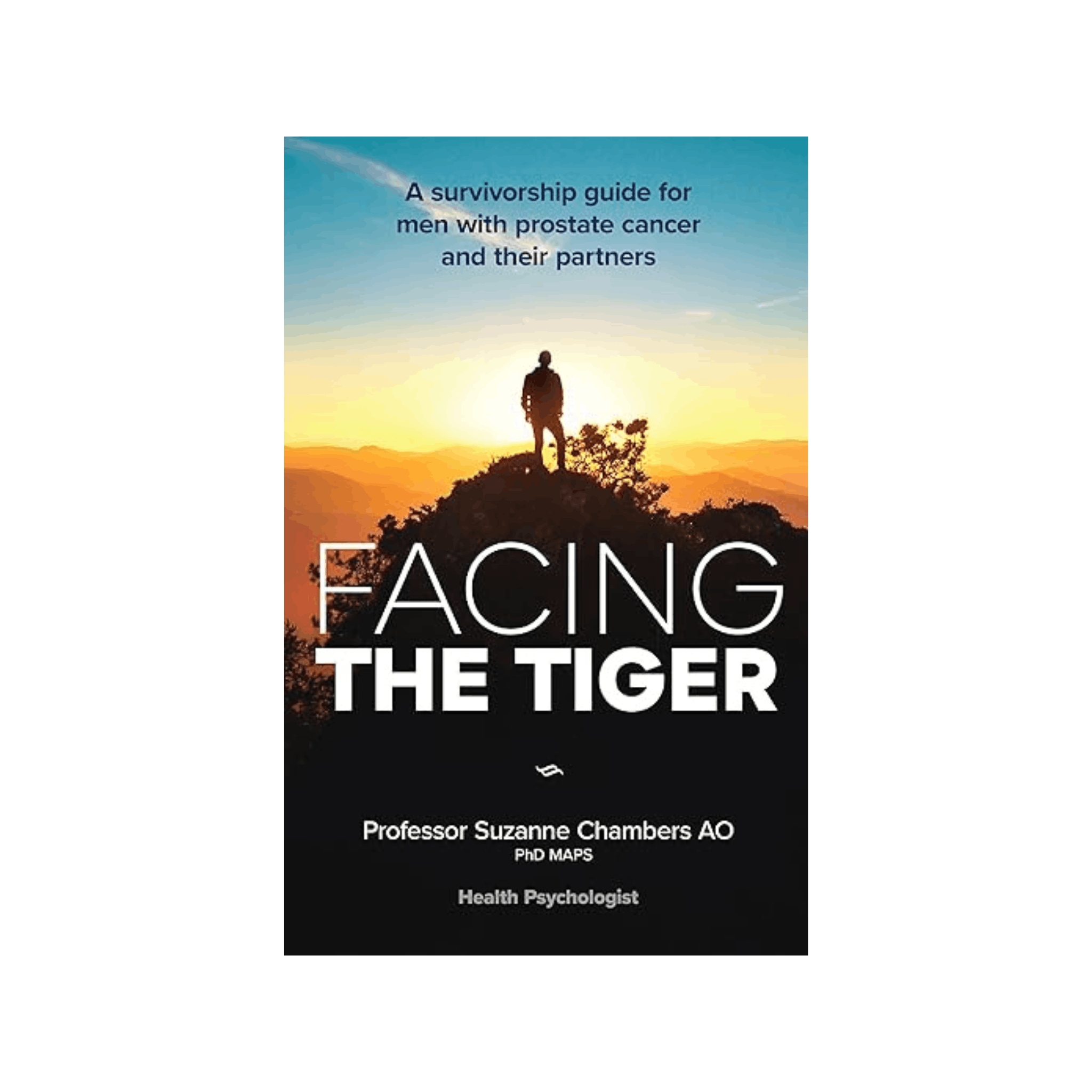
Facing the Tiger: A Survivorship Guide for Men with Prostate Cancer
-
Practical strategies to manage anxiety, depression, and stress following prostate cancer
Guidance on making treatment decisions you can live with
Support for partners navigating the emotional impact of diagnosis
Real-life stories from men and women sharing their experiences
A framework for improving communication with healthcare providers
The book draws on over a decade of psycho-oncology research and more than 30 years of clinical experience.
-
Professor Suzanne Chambers AO is an internationally recognised expert in the psychology of cancer and men’s health. Her work focuses on improving the psychological wellbeing of people affected by cancer and developing evidence-based interventions to support survivorship.
Her research and clinical experience underpin the practical strategies presented in Facing the Tiger.
-
The book addresses many of the challenges men face after a prostate cancer diagnosis, including:
coping with emotional stress and anxiety
communicating with partners and healthcare professionals
making informed decisions about treatment and recovery
maintaining mental health and wellbeing
navigating life after prostate cancer treatment
Drawing on decades of psycho-oncology research and real-life patient experiences, the book shares personal stories from men and partners who have navigated similar journeys.
-
Men diagnosed with prostate cancer
Partners and caregivers
Individuals navigating survivorship after treatment
Those seeking evidence-based psychological support strategies
-
Author: Professor Suzanne Chambers AO
Format: Paperback
Category: Prostate cancer survivorship and men’s health
Publisher: Australian Academic Press
Pages: approximately 180
Language: English
-
This guide does not provide medical advice or treatment recommendations. It is designed to complement, not replace, care from qualified healthcare professionals.
-
What is Facing the Tiger about?
The book provides practical strategies to help men and their partners cope with the emotional and psychological challenges of living with prostate cancer.Who should read this book?
It is designed for men diagnosed with prostate cancer, their partners and families, and healthcare professionals supporting survivorship care.Does the book provide medical treatment advice?
No. The book focuses on psychological wellbeing and coping strategies rather than clinical treatment decisions.